


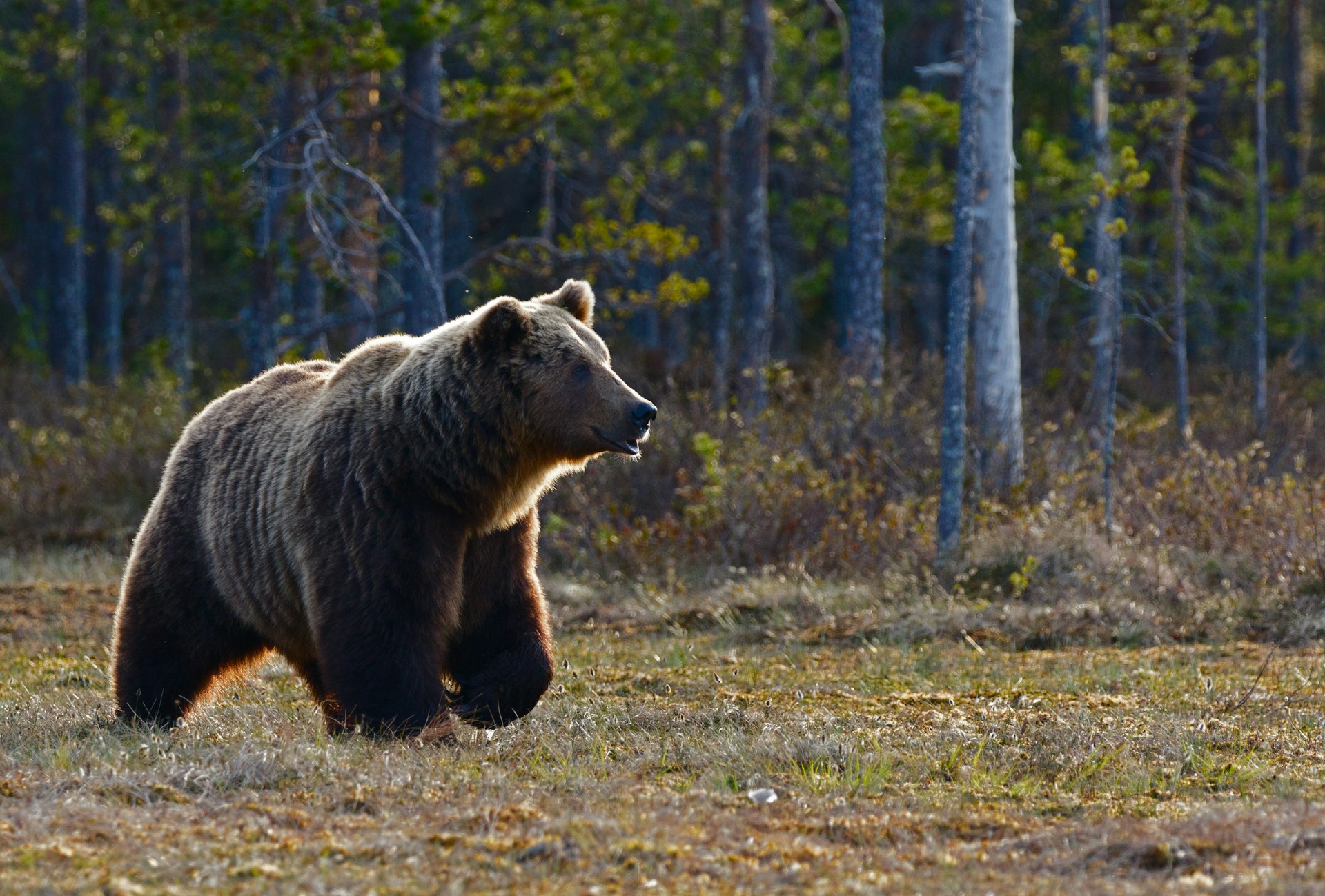
In Slovakia, 650 human-bear encounters were recorded in 2020. By 2024 that figure had risen to 1,900. Not over several decades of gradual change. In four years. Japan recorded 13 bear-related human deaths in 2025, the highest number the country has ever seen in a single year. In Romania, bears regularly enter the city of Brasov. In parts of North America, black bears have become a routine presence in suburban neighbourhoods in ways that were not the case a generation ago.
Human bear conflict is not a niche conservation issue. It is a rapidly escalating public safety challenge affecting communities across three continents, and the window for getting ahead of it with effective deterrence is closing faster than most authorities have been prepared to acknowledge.
This article looks at why the problem is growing, why so many standard bear deterrent approaches have limited effectiveness, and what a properly structured AI-powered deterrence response actually looks like in practice.
Why Human Bear Conflict Is Increasing Across Europe and Asia
The core driver of rising human bear conflict is a genuine conservation success story playing out at precisely the wrong speed. Brown bear populations across Europe and parts of Asia declined sharply through the nineteenth and most of the twentieth century due to hunting, habitat loss, and deliberate persecution. In the last 30 to 40 years, legal protection measures, rewilding efforts, and improved habitat management have allowed those populations to recover significantly.
Global brown bear populations are now estimated to exceed 200,000 individuals. In Scandinavia, the brown bear population grew from around 500 individuals in 1977 to over 3,300 by 2008 and has continued rising. Across Central and Eastern Europe, bears are reoccupying territory that had been empty for decades, including territory that is now farmland, village land, and suburban development that did not exist when bears last lived there.
The bears are not behaving differently. The landscape they are returning to is fundamentally different from the one their ancestors left. And the communities now living in that landscape have, in most cases, no cultural memory of how to coexist with large predators. The knowledge, the practices, and the infrastructure that once mediated the relationship between people and bears in those areas do not exist any more.
Japan presents a specific version of this problem. Rural depopulation has meant that the buffer zones of agricultural activity that historically kept bears away from towns have thinned or disappeared entirely. Bears that once stayed in mountain forest because human presence was sufficient deterrent now move through landscapes where that presence has retreated. The result, in 2025, was the worst year for bear-related human fatalities in Japanese recorded history.
Where Bear Encounters Are Most Likely to Occur
Research published on brown bear attacks found that when attacks occurred, half of the people involved were engaged in leisure activities. Hiking, camping, and outdoor recreation bring people into bear territory in ways they may not fully appreciate, particularly at dawn and dusk when bears are most active.
But the more significant and more preventable category of human-bear conflict involves bears entering human-managed spaces. Orchards, apiaries, livestock enclosures, refuse storage areas, and the edges of settlements all attract bears in ways that bring them into regular proximity with people and property. A bear that finds a reliable food source in a human-managed space is a bear that will return consistently until something changes.
Property damage from bears visiting farms and homesteads can be substantial. Beehives are among the most commonly targeted assets in European bear territory. Apiaries in Romania, Slovakia, Slovenia, and Sweden report repeated bear raids with losses running to thousands of euros per incident across affected communities. Livestock losses, fruit crop damage, and structural damage to outbuildings and feed stores add to that figure.
The pattern in Slovakia, where encounters nearly tripled in four years, is increasingly being studied as a signal of what other countries in Central and Eastern Europe can expect as bear populations there continue to expand. What is being learned from that data, above everything else, is that passive deterrence measures are struggling to keep pace with the frequency of encounters.
Why Standard Bear Deterrent Methods Have Real Limitations
The conventional toolkit for managing human-bear conflict includes electric fencing, bear-proof bins and food storage, noise deterrents, and passive deterrence through scent and visual markers. Each of these has a role in a comprehensive response. None of them is sufficient as a standalone solution, and several have well-documented failure modes that are worth being honest about.
Electric fencing is the most broadly effective passive deterrent where installed correctly. But correct installation matters enormously. Bears are intelligent enough to test fencing, to find gaps, and to learn whether a fence is live or not. A poorly maintained or incorrectly grounded electric fence is often no deterrent at all. In remote farm settings where checking and maintaining fencing is logistically difficult, the gap between the fence that exists on paper and the fence that actually functions on the ground can be significant.
Bear-proof food storage and waste management are essential but address only one aspect of the attractant problem. A farm that has secured its refuse but still has accessible fruit trees, unsecured feed stores, or unprotected beehives has removed one attractant while leaving others intact. Bears that have already established a routine of visiting a property will test all available options rather than giving up after the first one is removed.
Noise deterrents and rubber bullet interventions require human presence to deploy. That is their central limitation. The bear encounters that matter most, the ones that result in livestock losses, property damage, and escalating conflict, often happen at night or in early morning when staff are not present and monitoring is not active. A deterrent that depends on a person being there to use it is not a deterrent that works when it is most needed.
Research looking at large carnivore conflict patterns across North America and Europe found that roughly half of all conflicts were preceded by circumstances that were, in principle, preventable. The gap was not knowledge. It was the absence of a system that could act on that knowledge automatically, at the moment the encounter began to develop, without requiring human presence.
How AI Detection Changes the Bear Deterrent Equation
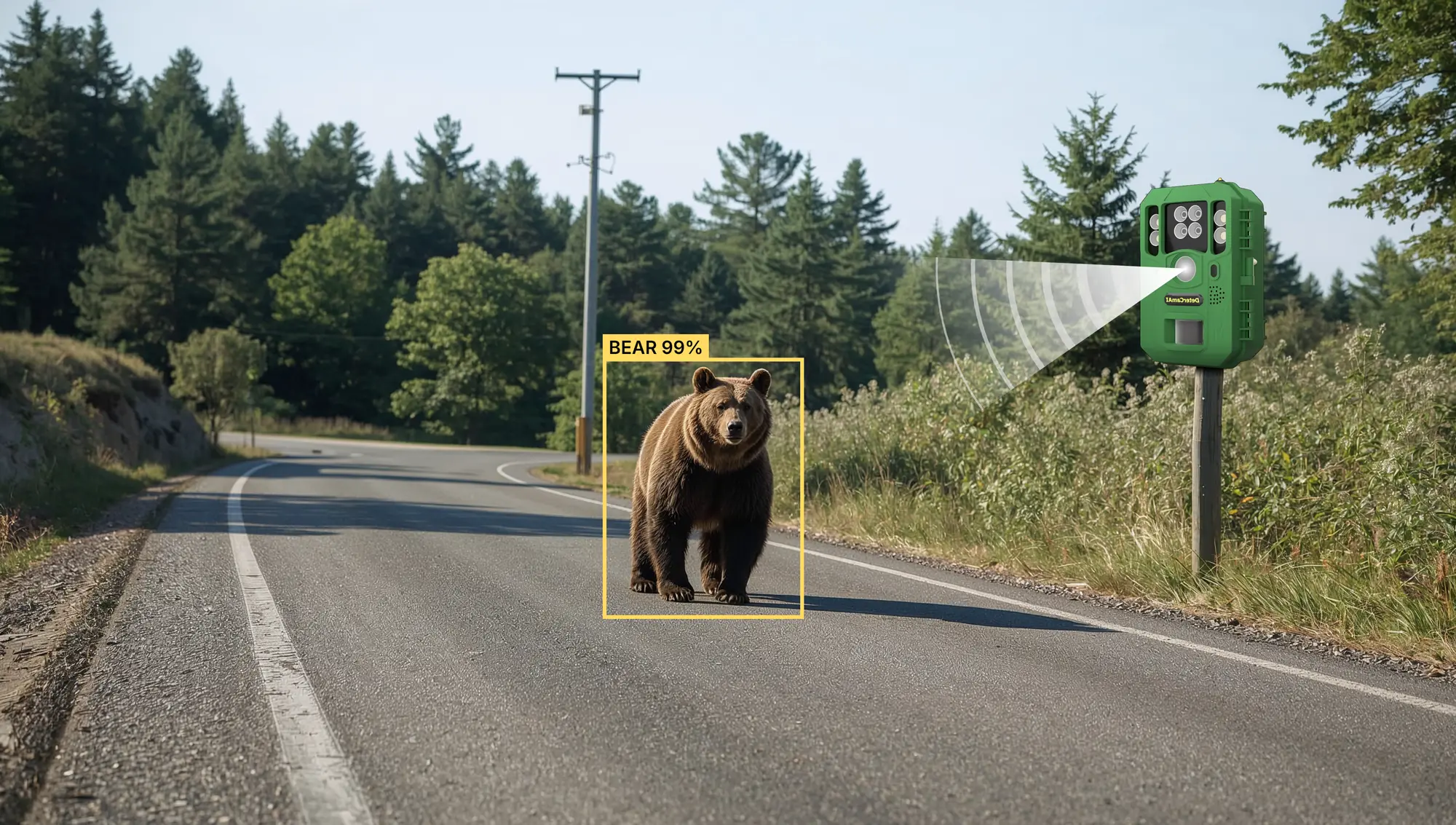
The problem with every passive bear deterrent method is timing. They either work all the time indiscriminately, which causes habituation, or they depend on a person being present to act, which means they fail precisely when the risk is highest. AI-based detection solves both of these problems simultaneously.
A camera-based detection system trained to identify large mammals can recognise a bear approaching the perimeter of a farm, property, or settlement and trigger a targeted deterrence response within seconds. That response is not passive. It is not the same stimulus presented to the same animal every time it visits. It can be varied in intensity, type, and direction based on what the detection system observes, which is precisely what prevents the habituation that undermines static deterrents over time.
The deterrence response itself, typically a combination of directed light and sound frequencies that bears find aversive, is designed to make the target area feel genuinely threatening rather than simply inconvenient. The goal is not to harm the bear. It is to build a consistent association between that location and an unpleasant experience, so that the bear redirects away from it without the need for any human to be present or involved.
Systems like the Animal Triggered System from Innovation Factory are designed to deliver exactly this kind of automated, species-aware deterrence for property and agricultural environments. The system monitors continuously, identifies the animal when it arrives at the perimeter rather than after it has already entered the protected area, and responds in the window where deterrence is most effective. For farms and rural properties in bear territory, that early detection window is the difference between a bear that approaches and a bear that gets in.
Practical Considerations for Properties in Bear Territory
If your farm, property, or facility sits in or near active bear habitat, a practical deterrence approach works through layers rather than relying on any single measure.
Start with attractant reduction. Bears visit human-managed spaces because those spaces offer food with lower effort than natural foraging. Securing refuse, moving beehives inside electric perimeters at night, timing livestock feeding to minimise overnight food presence, and maintaining fruit trees away from the property boundary all reduce the initial draw. Removing the attractant does not guarantee bears will not visit, but it reduces the frequency with which they establish the habit in the first place.
Layer physical deterrence on top of that. Electric fencing around the highest-value assets, particularly apiaries and livestock enclosures, provides a baseline of physical protection. Check and test it regularly. A fence that worked last season may not be working this season, and bears will discover that before you do.
Add active detection for the areas and time windows your passive measures cannot cover. The highest-risk period for most bear encounters is between dusk and dawn. That is when a detection system that monitors continuously and responds automatically provides the greatest added value over measures that depend on daylight and human presence.
If bears are already visiting your property regularly, document each incident with date, time, location, and what the bear was accessing. This data matters for insurance purposes, for reporting to local wildlife management authorities, and increasingly for training AI detection systems to recognise the specific approach routes and behaviour patterns associated with your particular situation. The IUCN framework on human-wildlife conflict and coexistence provides useful regional guidance on working with authorities when conflict is escalating.
The Conservation Case for Getting Bear Deterrence Right
Bear populations in recovery are a genuine ecological achievement. Apex predators play critical roles in ecosystem balance, and their return to landscapes from which they had been absent is broadly positive for biodiversity. The challenge is that coexistence between recovering bear populations and the communities now living in those landscapes requires active management and effective tools, not simply a policy of protection without practical support for the people bearing the daily cost of living alongside large predators.
When deterrence fails consistently, the political pressure for lethal control increases. In Slovakia, proposals for culling have followed directly from the spike in human-bear encounters. In Japan, urban bear sightings have driven calls for removal programmes. The trajectory from failed deterrence to conservation backlash is well documented and moves faster than most people expect.
Effective deterrence is therefore not just a property protection question. It is a conservation question. The best outcome for bears and for the communities living near them is a deterrence system that works reliably enough that conflict remains at a level people can tolerate, and that bears learn to avoid human spaces without either species being harmed in the process.
AI-powered detection and deterrence is increasingly the practical answer to that challenge. If you manage a property, farm, or facility in an area with documented bear activity, it is worth looking seriously at what an automated detection system could offer. Explore the Innovation Factory wildlife deterrence range or get in touch to discuss what is happening on your land and what a site-specific system would look like.
Innovation Factory develops AI-powered wildlife deterrence systems for farms, properties, railways, highways, and critical infrastructure. Explore the full wildlife deterrence solutions range or get in touch to discuss your requirements.