


A Modern Guide to Mountain Lion Deterrent
Living near the wild places of North America offers a unique connection to nature. The rugged landscapes are home to incredible wildlife, including the elusive and powerful mountain lion. Also known as cougars, pumas, or panthers, these large cats are a vital part of the ecosystem. However, as human communities expand into their territory,
encounters can become more common, creating a need for effective mountain lion deterrent strategies. Understanding how to keep these predators at a safe distance is key to peaceful coexistence.
This guide explores various methods for protecting your property, from simple, time-tested practices to cutting-edge technology. We will cover how to make your land less attractive to cougars, discuss different types of repellents, and introduce an innovative AI-powered solution that is changing the game in wildlife management. By the end, you will have a comprehensive understanding of how to deter mountain lions safely and humanely.
The Challenge: Living Alongside a Top Predator
Mountain lions are solitary and generally avoid humans. They possess a natural fear of people and prefer to hunt their typical prey, such as deer, elk, and raccoons. The problem arises when human habitats overlap with theirs. A residential area on the edge of a forest or a ranch in a mountain valley can inadvertently attract these powerful animals.
Several factors can draw a cougar closer to human occupied areas:
- Loss of Natural Habitat: Development pushes mountain lions into smaller territories, forcing them to travel through or near our communities.
- Presence of Prey: Deer, raccoons, and other prey animals are often abundant in suburban and rural neighborhoods. Where their food goes, mountain lions will follow.
- Easy Opportunities: Unsecured garbage, pet food left outdoors, and small livestock or pets can present an easy meal for a curious or hungry cougar.
These encounters create risks for people, pets, and livestock. While attacks on humans are exceedingly rare, the potential for conflict requires a proactive approach to safety. The goal is not to eliminate mountain lions but to manage our shared spaces intelligently. This is where effective deterrents become essential.
How to Deter Mountain Lions: Creating a “No-Go” Zone
The first line of defense is making your property as uninviting as possible to a mountain lion. Think like a cougar: they are looking for food, water, and shelter, all while avoiding threats. By removing these attractants and introducing elements that signal danger, you can encourage them to move on.
Secure Your Property and Remove Attractants
Start with the basics. A clean and secure property is your best mountain lion deterrent.
- Manage Garbage: Use trash cans with secure, locking lids. Store them in a shed or garage until collection day. The smell of garbage can attract a wide range of animals, including a cougar’s prey.
- Secure Pet Food: Never leave pet food or water bowls outside overnight. Feed your pets indoors to avoid creating a predictable food source.
- Protect Livestock and Pets: This is crucial. Bring pets indoors, especially between dusk and dawn when mountain lions are most active. For livestock like goats, sheep, or chickens, a robust, fully enclosed pen is non-negotiable. A simple fence may not be enough, as cougars are incredible jumpers. A covered enclosure is the most effective solution.
Make Your Yard Feel Unsafe
Mountain lions are ambush predators that rely on stealth and cover. By altering your landscaping, you can remove the elements that make your yard an appealing hunting ground.
- Clear Brush and Vegetation: Remove dense or low-lying vegetation that could provide cover for a cougar. Prune the lower branches of trees and create clear sightlines around your home, children’s play areas, and livestock enclosures.
- Install Motion Activated Lighting: A sudden blast of bright light can startle and deter a mountain lion. Install motion-activated floodlights around the perimeter of your home and outbuildings. This is a simple but highly effective mountain lion repellent.
- Use Fencing Strategically: While a cougar can clear a standard fence, tall and imposing fencing (over 8 feet) with angled tops can be a deterrent. Electric fencing is another option, particularly for protecting livestock.
Traditional Mountain Lion Repellent Methods
Beyond property management, several active repellents can help keep cougars away. These methods work by startling the animal or making the area seem occupied and dangerous.
Auditory and Visual Deterrents
Sound and light can be powerful tools. Mountain lions dislike loud, unexpected noises and bright, flashing lights.
- Noise Makers: Wind chimes, radios left on in outbuildings, or motion-activated alarms can create an unpredictable auditory environment that makes a cougar uneasy.
- Scare Devices: Items that move unpredictably, like scarecrows or shiny flagging tape tied to fences, can be a visual deterrent. However, intelligent animals like cougars may become accustomed to these over time if they are not moved or changed periodically.
The Role of Guardian Animals
For centuries, property owners have used other animals to protect livestock. Certain breeds of dogs are particularly well-suited for this role. Livestock guardian dogs, such as Great Pyrenees or Anatolian Shepherds, are bred to live with and protect flocks. Their large size, loud bark, and territorial nature make them an excellent mountain lion deterrent. Their presence alone signals that your property is well defended.
Limitations of Traditional Methods
While these strategies are valuable, they have limitations. Static scare devices can lose their effectiveness. Motion-activated lights and sounds can trigger false alarms from non threatening wildlife. Guardian animals require significant care and training. Most importantly, are reactive or passive; they don’t offer a smart, adaptive solution that can distinguish a real threat from a passing deer. This is where technology steps in to offer a more advanced approach.

The Future of Deterrence: AI-Powered Protection
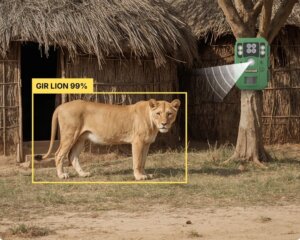
Imagine a system that acts like a 24/7 digital sentry, specifically trained to identify a mountain lion and take immediate, humane action to guide it away. This is no longer science fiction. AI-powered detection and deterrence systems are emerging as a groundbreaking solution for human-wildlife conflict.
Initially developed for areas with high lion-human conflict, this technology is now being adapted for North American predators like mountain lions. It provides a smart, targeted, and humane mountain lion repellent that overcomes the shortcomings of traditional methods.
How an AI Deterrent System Works
This advanced system integrates several components into one intelligent network.
- Smart Detection: High-definition cameras and sensors are placed at strategic points around a property or community perimeter. These cameras use artificial intelligence and machine learning to analyze movement and behavior patterns in real-time. The AI is trained on thousands of images to accurately distinguish a mountain lion from a deer, a coyote, or the family dog.
- Instantaneous Analysis: When the system detects an animal, the AI instantly analyzes its size, shape, and gait. If it matches the profile of a mountain lion, the system confirms a threat and activates the deterrents.
- Tiered, Humane Deterrents: Upon detection, the system triggers a sequence of non-lethal deterrents designed to scare the cougar without harming it. This can include:
-
- High-Intensity Flashing Lights: Sudden, bright strobes disorient and startle the animal.
- Directional Sound Alarms: Loud, targeted sounds, such as predator calls or sharp alarms, are directed at the cougar.
- Ultrasonic Signals: High-frequency sounds that are uncomfortable for cougars but inaudible to humans are deployed to make the area undesirable.
- Real-Time Alerts: Simultaneously, the system sends an instant notification to the property owner’s smartphone or a central dashboard. This allows for immediate awareness and gives authorities a real-time view of wildlife movement in the area.
The Benefits of an AI-Based Mountain Lion Deterrent
This technological leap offers unparalleled advantages for peacefully coexisting with wildlife.
- Precision and Accuracy: The primary benefit is its ability to specifically target mountain lions. This eliminates false alarms and ensures that deterrents are only used when a real threat is present, preventing wildlife from becoming habituated.
- Humane and Non-Lethal: The system is designed to repel, not harm. By using light and sound, it guides the animal away from human areas, protecting both the mountain lion and the community. This aligns with modern conservation ethics.
- 24/7 Automated Vigilance: An AI system never sleeps. It provides continuous monitoring, day and night, in any weather condition. This automated protection is especially valuable during a cougar’s peak activity hours at dawn and dusk.
- Adaptable and Scalable: The technology is modular. It can be scaled to protect a single rural home, a small farm, or an entire community on the edge of a wilderness area. Solar-powered options allow for installation in remote, off-grid locations.
A Comprehensive Strategy for Coexistence
There is no single magic bullet for preventing conflicts with mountain lions. The most effective approach combines proven property management techniques with modern technological solutions. Start by making your land unappealing, removing attractants, and securing animals. Then, enhance your protection with layers of deterrents.
For those living in areas with significant mountain lion activity, investing in an AI-powered system offers the highest level of proactive and humane protection available today. It transforms wildlife management from a reactive guessing game into a precise, data-driven science.
By respecting the nature of these magnificent predators and using the best tools at our disposal, we can create safer communities for ourselves and ensure that mountain lions continue to thrive in their natural habitats for generations to come. Learning how to deter mountain lions is not about building walls between us and the wild; it’s about building a bridge of understanding and intelligent coexistence.